The Palaestra at Olympia
Just outside the sacred grove of Olympia stood a square, sand-floored training hall. Wrestlers, boxers and pankration fighters came here to prepare for the ancient Olympic Games, and it is the building our academy takes its name from.
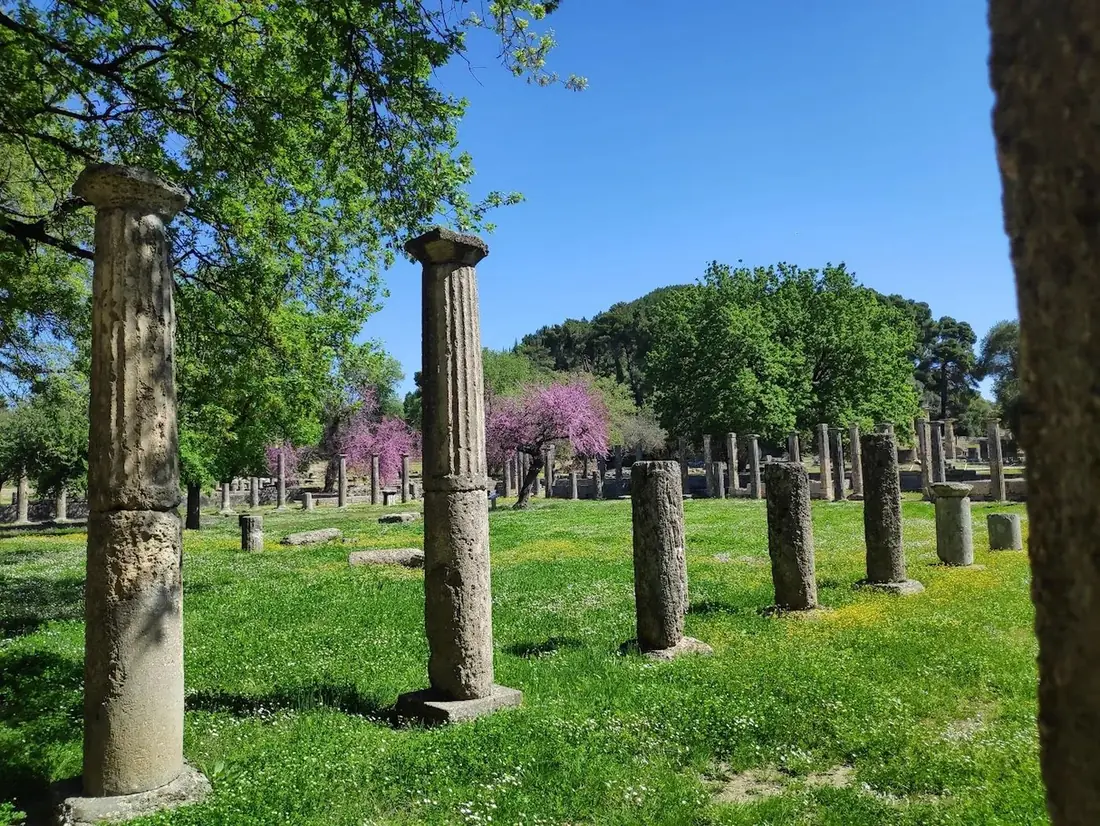
The palaestra was not where the Games were won; it was where athletes got ready for them. It sat west of the Altis, the sanctuary of Zeus, beside the Kladeos river, and formed one complex with the gymnasium next door, where runners and javelin throwers trained in the open. Inside, the focus was on wrestling, boxing and the pankration, a bruising mix of the two, and athletes from across the Greek world trained side by side here in the weeks before the festival.
The building is almost a perfect square. At its heart lay a courtyard of fine sand about 41 metres across, ringed by a shaded walkway of Doric columns where athletes could rest or watch.
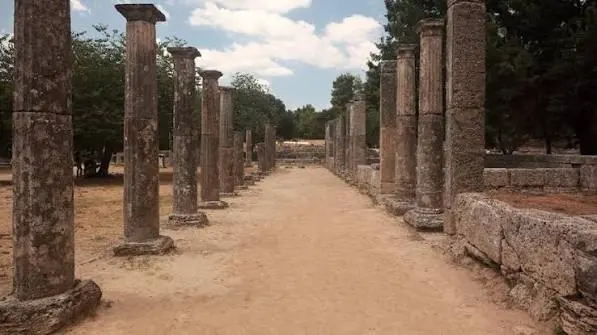
Behind the colonnade were rooms for each step of an athlete's routine: changing rooms and washrooms, the elaiothesion where they rubbed their bodies with olive oil, the konisterion where they dusted themselves with fine powder, and bench-lined rooms where orators and philosophers taught. After training, athletes scraped off the oil, powder and sand with a curved metal strigil. A wrestler might spend the morning on the sand and the afternoon listening to a speaker.
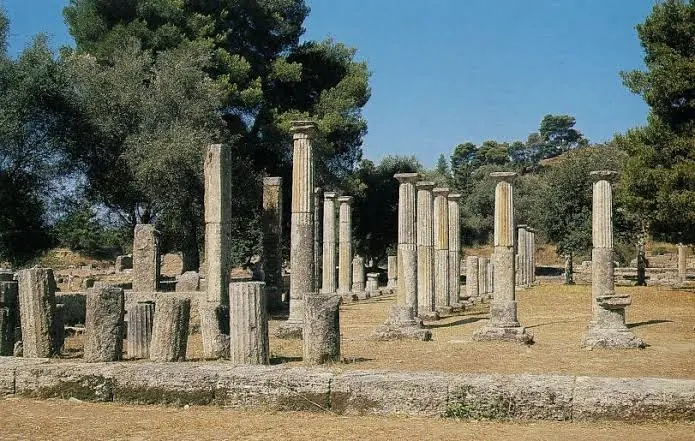
The mud-brick upper walls and timber roof are long gone, but the stone foundations survive, and 32 of the 72 courtyard columns have been put back up. Walking among them, you can still trace the square of the old training ground.
Why it matters to Palistra
We named the academy after this kind of place on purpose. A palaestra was where people turned up, practised with others and got better through repetition and honest correction. That is how our cohorts work: you build, test and improve real projects every week alongside other professionals.
Sources: Archaeological Museum of Olympia, "The Palaestra" · You Go Culture, "The Palaestra"