What was a palaestra?
For roughly a thousand years, towns across the Greek and Roman world kept a walled courtyard of sand where people came to wrestle, train and learn. This is the story of that space, and why it still makes sense as a name for a place to build skills.
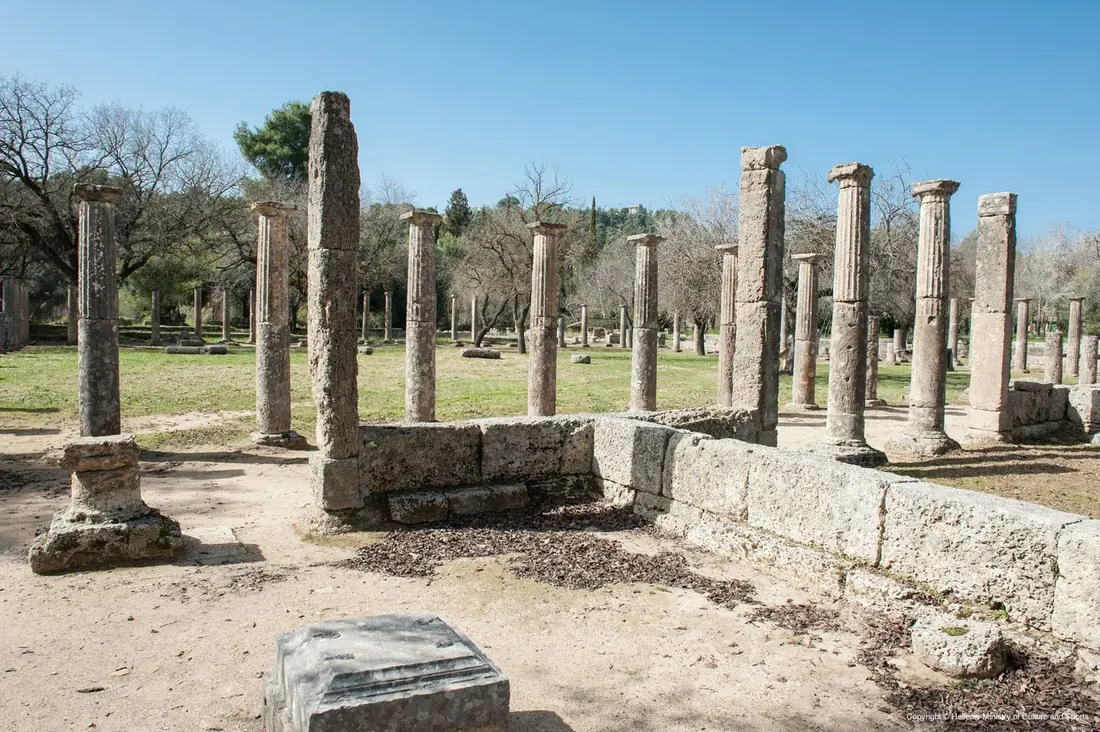
The word comes from the Greek palē, wrestling, and palaiein, to wrestle. At its simplest, a palaestra was a wrestling school: an open court of sand for wrestling, boxing and the pankration. It usually sat inside a larger gymnasium with running tracks and space for the discus and javelin, though a palaestra could also stand on its own. In Athens, many were run privately and known by the name of their founder or teacher.
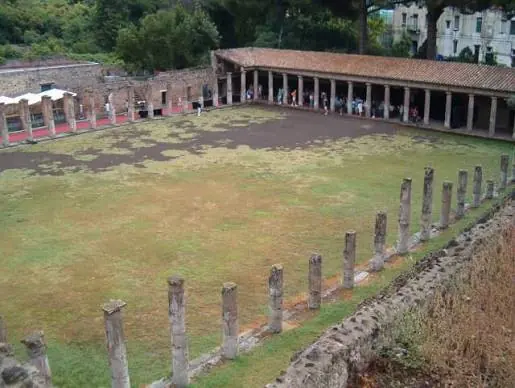
These were never only places to sweat. The Greek ideal of arete, excellence, joined a capable body to a sharp mind, so the same buildings held rooms for talks and lessons. Socrates and Plato found students in the gymnasia, and grammar, music and rhetoric were taught alongside physical training. By the 4th century BC the building had a recognisable form, later described by the Roman architect Vitruvius: a square court ringed by colonnades, with rooms for undressing, oiling, bathing and ball games, and seating where scholars could hold forth.
The Romans adopted the idea, built palaestrae into their villas and, under the empire, joined the courtyard to public baths. By the 5th and 6th centuries AD, as public nudity and mixed bathing fell out of favour, many gymnasia closed. The bathhouse lived on as the hammam, but the exercise court was left behind.
Why it matters to Palistra
What made the palaestra work was its mix: hard practice, a teacher who corrected you, and peers who pushed you, all in one place. Palistra Academy borrows that model for a new skill. You learn the idea, practise it in live sessions, get honest feedback and keep building until it holds.
Sources: Wikipedia, "Palaestra" · TheCollector, "How Ancient Greek Gymnasia Trained Both the Body and the Mind" · Smith's Dictionary of Greek and Roman Antiquities, "Palaestra"